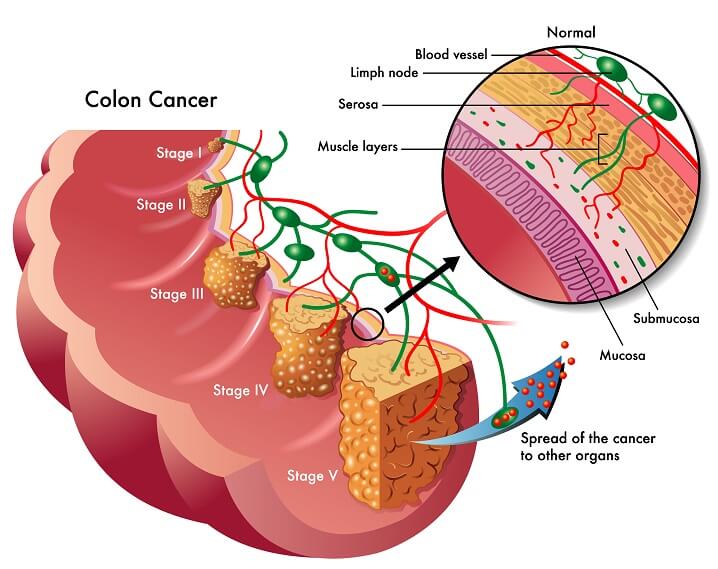
Colon cancer is a form of colorectal cancer that begins in the colon or rectum. It is one of the most commonly diagnosed cancers worldwide and remains a leading cause of cancer‑related deaths. Despite its prevalence, colorectal cancer is highly preventable and very treatable when detected early.
Most colorectal cancers start as polyps, which are small, noncancerous growths on the inner lining of the colon or rectum. While many polyps remain harmless, certain types—especially adenomas and serrated polyps—can gradually develop into cancer if not removed.
If untreated, colorectal cancer can spread to other organs (metastasis).
- Symptoms
- Screening
- Risk Factors
- Prevention
- Treatment
Colorectal cancer often causes no symptoms in its early stages, which is why routine screening is essential. When symptoms do occur, they may include:
- A persistent change in bowel habits (diarrhea, constipation, or narrowing of stool)
- A feeling of incomplete bowel emptying
- Rectal bleeding or bright red blood
- Blood in the stool, causing stools to appear dark brown or black
- Abdominal pain, cramping, gas, or discomfort
- Unexplained weakness or fatigue
- Unintended weight loss
These symptoms are consistent with major medical sources.
Screening detects precancerous polyps and early cancers, improving survival and preventing disease. The U.S. Preventive Services Task Force (USPSTF) and CDC recommend:
For adults at average risk
Begin screening at age 45 and continue through age 75.
Ages 76–85: screening is individualized based on health status and prior screening.
Screening test options
Stool-based tests
- Fecal immunochemical test (FIT): every year
- Guaiac-based fecal occult blood test (gFOBT): every year
- FIT-DNA test (stool DNA test): every 3 years
Visual/structural exams
- Colonoscopy: every 10 years
- CT colonography (virtual colonoscopy): every 5 years
- Flexible sigmoidoscopy: every 5 years, or every 10 years with annual FIT
If any non‑colonoscopy test is abnormal, a follow‑up colonoscopy is required.
People at increased or high risk may need to start screening before age 45, undergo screening more frequently, and use specific tests (usually colonoscopy). Risk factors include:
- A strong family history of colorectal cancer or advanced polyps
- A personal history of colorectal cancer or adenomatous/serrated polyps
- Inflammatory bowel disease (ulcerative colitis or Crohn’s disease)
- Hereditary cancer syndromes (e.g., Lynch syndrome, FAP)
- Prior abdominal or pelvic radiation for another cancer
Lifestyle factors that increase risk include:
- Physical inactivity
- Smoking
- Heavy alcohol use
- Obesity
- Diets high in red or processed meats and low in fiber
Evidence‑based strategies to reduce colorectal cancer risk include:
- Maintaining a healthy weight
- Eating a diet rich in fruits, vegetables, and whole grains
- Limiting red and processed meats
- Exercising regularly
- Avoiding smoking
- Limiting alcohol consumption
Screening remains the most effective prevention tool, as removing polyps prevents cancer from developing.
Treatment depends on the cancer’s stage, location, and the person’s overall health. Options may include:
- Surgery (often the primary treatment for early-stage disease)
- Chemotherapy
- Radiation therapy (more common for rectal cancer)
- Targeted therapy
- Immunotherapy
A healthcare professional can help determine the most appropriate treatment plan.
Colon cancer (colorectal cancer) is a malignant tumour that originates in the lining of the large intestine. In the UAE, it ranks among the top three most commonly diagnosed cancers. CANCER INCIDENCE IN UNITED ARAB EMIRATES ANNUAL REPORT OF THE UAE – 2023
Colon cancer is a serious and potentially life-threatening condition that can be prevented and treated if detected early. It is important to be aware of the symptoms and risk factors for colon cancer and to undergo regular screening if you are at risk. Making healthy lifestyle choices can also help reduce your risk of developing colon cancer. If you have any concerns about colon cancer or any other health issue, be sure to consult with your healthcare provider.
BOOK AN APPOINTMENT
- At what age should I start colon cancer screening in the UAE?
- What is the difference between colon cancer and rectal cancer?
- Does HSMC accept insurance for colorectal treatment?
- Can colon cancer be cured if caught early?
In the UAE, health authorities generally recommend that adults start colorectal (colon) cancer screening at age 40 if they are at average risk, because cancer rates rise with age and early detection saves lives.
At Harley Street Medical Centre, your clinician will review your personal risk factors (family history, previous polyps, inflammatory bowel disease, symptoms) and recommend the appropriate screening schedule — which may be earlier or more frequent if you are at higher risk.
Both colon cancer and rectal cancer are types of colorectal cancer, but they refer to where the cancer starts:
- Colon cancer begins in the large intestine (colon), which absorbs water and nutrients from food.
- Rectal cancer starts in the rectum, the last several inches of the large intestine before the anus.
At HSMC, specialists understand both conditions and tailor diagnosis, treatment and surveillance plans based on exact location, stage, and patient needs.
Yes. Harley Street Medical Centre accepts many major insurance plans for colorectal consultations, screening tests, procedures, and treatment — subject to your individual policy’s coverage rules.
We recommend contacting your insurer or our clinic to check eligibility and benefits related to colorectal screening and treatment. View our Accepted Insurance providers
Yes. When detected early — especially before cancer spreads — colon cancer is highly treatable and often curable. Early detection through screening increases the likelihood of successful outcomes significantly because precancerous polyps can be removed before they become cancerous and early-stage cancers respond better to treatment.















 أنقر هنا
 أنقر هنا